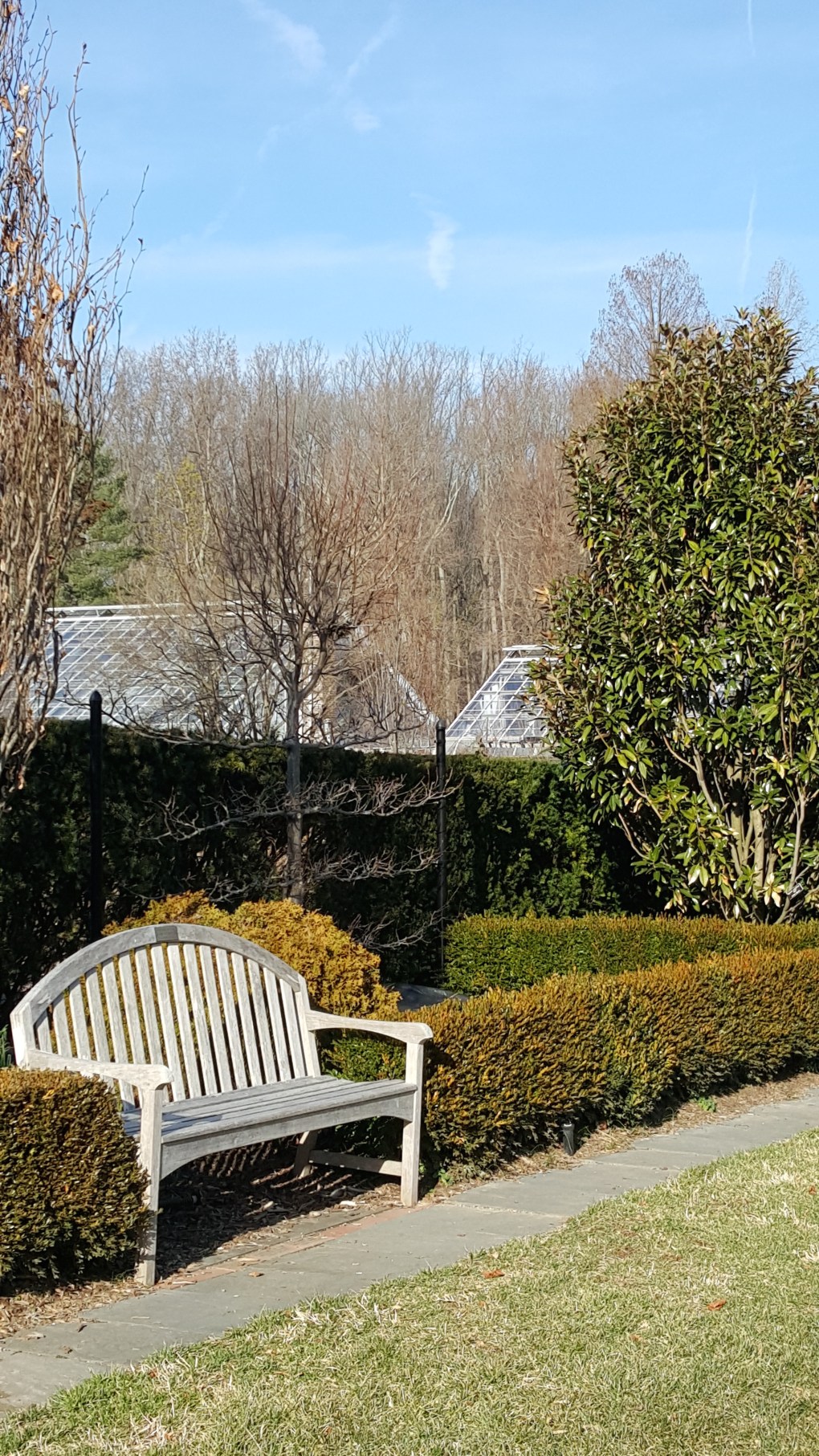
All kinds of bad behavior has been showcased on U.S. news lately. For some, it has been entertaining; and for others, hugely influential. I’ve been thinking about the subject of courtesy for months, and didn’t know where to start. Well, there’s nothing like taking a walk on an unexpectedly beautiful, warm and sunny afternoon in early March to reach clarity. Two things linked up for me: 1) words and actions are a powerful influence; and 2) the phrase “politically correct” or “PC” is BS.
The power of words and actions.
Think about what happened to the greeting, “Hello.” Somewhere along the line, we began to respond to strangers less and less with simple niceties, like a greeting and follow-up “How are you?” Mostly, we rush through life and past each other. We absorb ourselves in our devices and opt out of social interaction. We avoid eye contact.
At one time, it was common to greet strangers in passing when they made eye contact. There were also a few people who would look others straight in the eyes as they passed, and snub them when they said hello. Add to those few an entire generation admonished as children to not speak to strangers, under any circumstances. Our cultural niceties eroded.
No one likes rejection, and many people actively avoid it. Now, the people who look you in the eye and greet you are in the minority. Remember the English idiom, “One bad apple spoils the barrel.” Next thing you know, you’ve got a culture change.
And that’s just one example.
Another occurred during rush hour on the subway platform. A young man raced for his train like he was running the gauntlet. In the process, he crushed an old man between the escalator rail and a pole. He only stopped when he saw me try to help the old man he had jammed up. He was mortified and profusely apologized. People move through life completely unaware (and unconcerned) of others in the same space. It happens all the time. Someday that guy will himself be an old man, similarly invisible, and maybe even afraid to navigate this society.
Political correctness.
When someone uses the term “politically correct,” it’s usually with resignation or resentment. You may even see eyeballs roll and a sneer as they say, “I have to be politically correct.” God forbid you curb behavior, language, or certain terms to avoid offending certain groups of people. Doesn’t this really mean that a filter would be appropriate so you can treat people with courtesy and respect? The fact that people would resist this is sad.
Evidently, there are some people who fully admire those who say what they really think, especially when those verbalized thoughts are offensive on so many levels. This astounds me. It’s as though the admirers want to revert to their five year old selves and cut their own filters loose.
Bad behavior is powerful. When it comes from the top, it seems to almost have a viral effect. That it comes from the top, seems to make it okay — at least to people affected by the “virus.” Could good behavior have the same effect?
In this increasingly rude society, I decided to push myself to do what is — sadly — uncomfortable. When I catch someone’s eye, I make a point to acknowledge them with a greeting or a smile. When I’m buying something, I look a cashier in the eyes, smile, and say “Thank you” when we complete the transaction. Simple things like that. Maybe we’ve gotten used to treating customer service people like the nameless and the faceless, despite their name tags. How could that make anyone feel valued?
The responses have been encouraging and positive overall. Some recipients of this courtesy look pleasantly surprised. Hell, I’m pleasantly surprised — and wondering why this actually takes effort and what was my role in the loss of basic civility.
Maybe with little steps we can start a cascade of kindness and civility, one greeting and smile at a time.


 Wobblenot